Youth Brazilian Jiu-Jitsu gives kids a place to move, think, and grow with structure you can actually feel from week to week.
New York parents are busy, kids are busy, and the calendar fills up fast. When families reach out to us about Youth Brazilian Jiu-Jitsu, it is usually not because they want another activity just to “stay occupied.” It is because they want something that feels purposeful: real movement, clear routines, and small wins that add up over time.
Youth Brazilian Jiu-Jitsu also fits what a lot of pediatric guidance encourages: meaningful physical activity through structured sports and martial arts. For many kids, that structure matters as much as the exercise itself. A class has a beginning, a middle, and an end, plus rules that help children learn how to participate safely with other people.
Just as important, we try to talk about benefits in a grounded way. Training can support confidence, focus, and resilience, but we do not treat any of that as guaranteed. Kids are individuals, progress is personal, and the quality of coaching and safety practices makes a huge difference in what the experience feels like.
What Youth Brazilian Jiu-Jitsu actually is, and why parents like the “grappling” format
Brazilian Jiu-Jitsu is primarily a grappling art. Instead of punches and kicks, most of our youth training focuses on positions, balance, grips, escapes, takedowns, and controlled submissions. For many NYC parents, that difference is meaningful, especially for children who are not excited by the idea of getting hit.
That said, BJJ is still a contact sport. Bodies bump, kids learn how to fall and move with a partner, and eventually some students do controlled sparring in an age-appropriate way. We think it is more responsible to say that clearly than to pretend the activity is risk-free.
One reason Youth Brazilian Jiu-Jitsu tends to “stick” for kids is the problem-solving. A technique is rarely just one move. It is a sequence of decisions: where your hips go, what your hands do, how you keep your balance, how you adjust when a partner reacts. Kids do not have to love sports to enjoy that puzzle-like feeling.
The non-physical skills we build into class, on purpose
We design youth classes to teach more than techniques. Our curriculum emphasizes respect, discipline, patience, teamwork, confidence, and perseverance. Those themes sound simple, but you can see them play out in very practical moments: waiting your turn, listening to a partner, trying again after a messy rep, or stopping immediately when a coach calls time.
You might notice your child becoming more comfortable asking for help. You might see better frustration tolerance when a technique does not work the first time. You might also see nothing dramatic at first, and then one day it just clicks. Both outcomes are normal.
Why Youth Brazilian Jiu-Jitsu in New York works for real NYC schedules
In New York, convenience is not a luxury, it is the difference between “we can do this” and “we tried once and it fell apart.” Families often want an activity that is close to home or school, accessible by public transportation, and offered after school or on weekends. We keep that reality in mind when we build our class schedule.
Another reason Youth Brazilian Jiu-Jitsu in New York is gaining interest is that it is beginner-friendly in a very specific way. Kids do not need to show up already coordinated, already strong, or already confident. We teach the basics progressively, and we expect beginners to look like beginners.
And yes, screens are part of modern life. We do not pretend a martial arts class magically fixes screen habits. But we do see families appreciate having a weekly block of time where kids move, interact face-to-face, and work toward something tangible.
Competition is optional, not the “point”
A big shift we hear from parents is that they want benefits without pressure. Tournament travel, weekend after weekend, can be a lot. We make space for kids who want to compete and kids who do not. Training for fitness, skill development, confidence, and community can be a complete experience by itself.
Safety first: what responsible youth training should include
When parents ask, “Is it safe?” we treat that as a serious, detailed conversation, not a quick yes. Pediatric guidance distinguishes between lower-risk noncontact instruction and higher-risk contact sparring and competition. That matches what we see in practice: format matters.
Our job is to coach in a way that keeps the room controlled and the expectations clear. Your job, as a parent, is to feel comfortable with how a program communicates about safety, supervision, and what happens when a child needs a break.
The practical safety conversations you deserve to have with us
Here are the safety topics we are always prepared to explain, clearly and specifically:
• Supervision and class structure, including how we keep kids engaged so the room stays calm and organized
• Partner matching based on age, size, experience, and temperament, not just who happens to be standing nearby
• Rules against dangerous techniques and rough behavior, plus how we enforce those rules consistently
• Hygiene expectations for kids and families, including clean uniforms or training clothes and basic skin protection
• Injury protocols and how we handle a child who feels pain, discomfort, or simply overwhelmed in the moment
• How students can pause, get a coach’s attention, or sit out without being shamed or pressured
We also encourage you to ask about how we introduce submissions and how we manage takedowns for different ages. Those details matter, and you should never feel awkward asking.
Our youth programs are age-based for a reason
Kids are not just “smaller adults,” and a 6-year-old and a 12-year-old should not be taught the same way. We separate youth students into age-based groups to better match instruction with physical, cognitive, and emotional development.
Little Warriors (ages 5 to 9)
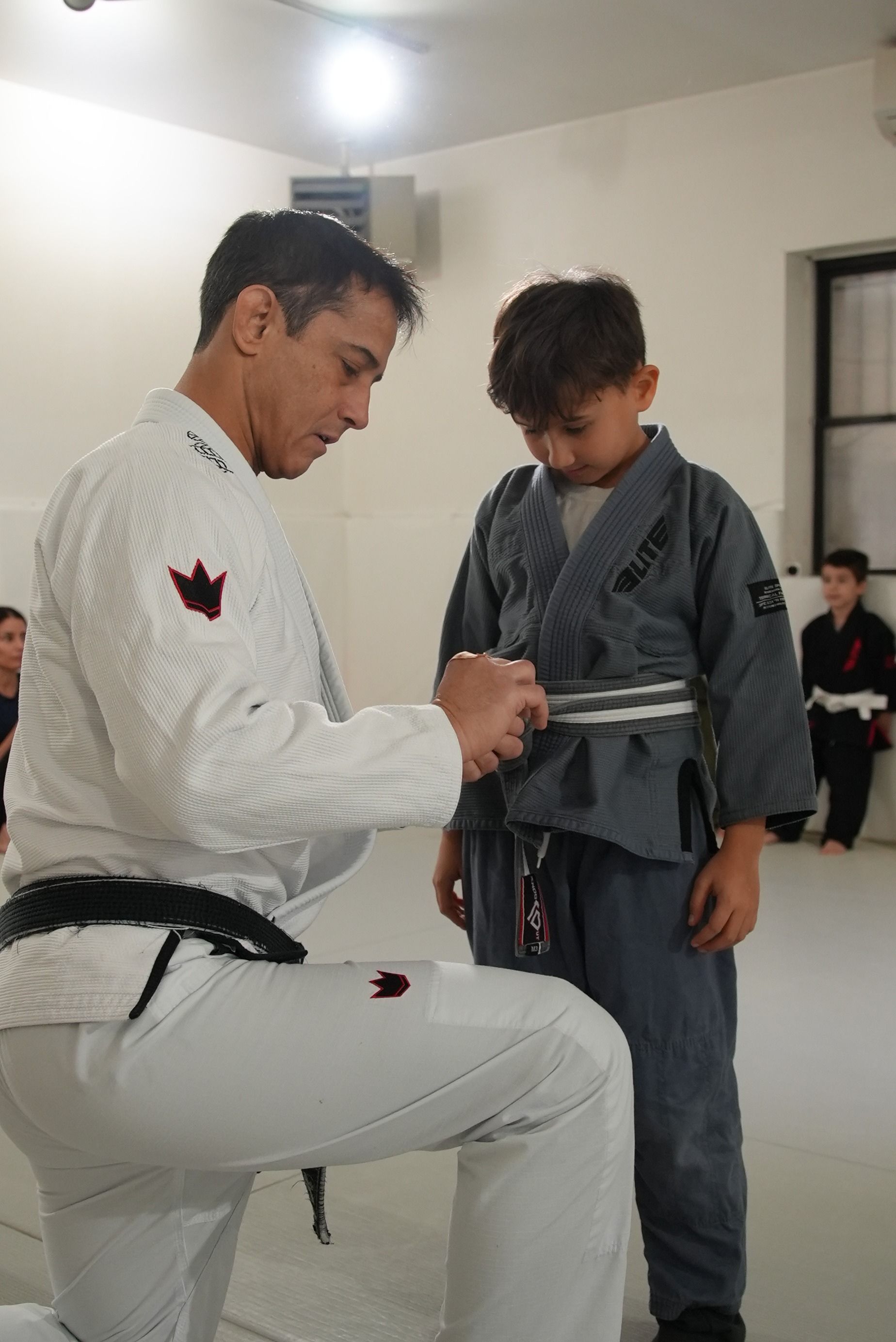
In our Little Warriors program, we keep instruction simple and active. Classes blend movement skills, basic grappling concepts, and short technique segments with games that teach coordination and safe partner interaction. At this age, success often looks like following directions, learning personal space, and practicing with control.
Teen Warriors (ages 10 to 13)
Our Teen Warriors program can handle more detail and more structured problem-solving. We still keep safety and control at the center, but older kids can typically focus longer, remember multi-step techniques, and do more positional training. This age group often enjoys the clear goals built into Youth Brazilian Jiu-Jitsu: show up consistently, learn the fundamentals, and improve one piece at a time.
What a first class usually looks like (and what you can tell from it)
A first class should feel welcoming and organized, not chaotic. We like parents to know what is coming, because that alone lowers nerves for kids who are shy or unsure.
Most first classes follow a familiar rhythm:
1. Quick introductions, basic rules, and what “tap” means for safety and communication
2. Warm-up drills that build coordination, like shrimping, rolling, and balance-based movement
3. Technique instruction with a clear theme, such as an escape or a control position
4. Partner practice where we walk the room, adjust details, and keep the pace appropriate
5. A controlled closing activity that reinforces teamwork and listening skills
If your child feels overwhelmed, we treat that as information, not a failure. Sometimes a kid needs a minute to watch, breathe, and rejoin when ready. We would rather build trust slowly than force participation.
Common questions NYC parents ask before enrolling
What should my child wear to the first class?
Policies can change, so we keep this simple: check the website or reach out before your first visit so you know what we prefer for beginners. In many cases, athletic clothing that allows movement is fine for an intro class, and we will let you know when a gi is required.
How often should kids train?
A practical starting point is one or two consistent classes per week. That gives kids enough repetition to remember what they learned, while still leaving room for school, recovery, and other activities. From there, we can help you adjust based on your child’s interest and energy.
Does my child need to be athletic or aggressive?
No. In fact, Youth Brazilian Jiu-Jitsu often works well for kids who are thoughtful, cautious, or not sure where they fit in sports. We teach movement step by step, and we coach cooperation as much as we coach technique.
Can training help with confidence and focus?
It may. Kids practice manageable challenges: try, fail, adjust, try again. That process can support confidence, patience, and persistence. We also want to be honest: results vary, and progress rarely moves in a straight line. What we can promise is a consistent environment where effort, respect, and safe training are the standard.
Will my child have to compete?
No. Competition is optional. Many kids train recreationally and still grow in fitness, skill, and self-assurance without tournaments.
A simple parent checklist for choosing a youth program you can trust
If you are new to martial arts, it helps to know what to look for beyond the marketing. When you watch a class, pay attention to the “small” things, because those are usually the big things.
• Do coaches reinforce control, or do kids get away with roughness and excuses?
• Are instructions age-appropriate, with clear boundaries and manageable attention spans?
• Is partner matching thoughtful, especially for beginners and smaller children?
• Are hygiene rules explained plainly, with a clear approach to mat cleaning and illness?
• Do kids look supported, including the shy ones and the ones who get frustrated easily?
• Is safety communication direct, including how to pause, tap, and ask for help?
When those pieces are in place, Youth Brazilian Jiu-Jitsu becomes what it should be: a challenging sport that is taught responsibly, with your child’s well-being at the center.
Take the Next Step
Building a healthy routine in New York takes intention, and the right program should make that routine easier to keep, not harder. We built our youth classes around age-appropriate coaching, clear expectations, and steady progress so your child can enjoy Youth Brazilian Jiu-Jitsu without unnecessary pressure.
If you want a program where competition is optional, safety is openly discussed, and kids are coached as kids (not mini adults), we would love to help you explore what fits your family at Range Brazilian Jiu-Jitsu NYC.
Ready to train? Join a Jiu-Jitsu class at Range Brazilian Jiu-Jitsu NYC and start building your skills.