A calm first class starts before you ever step on the mats, with a simple plan your child can understand.
Starting Youth Brazilian Jiu-Jitsu can feel like a big leap for a kid and for you. In New York, everything already moves fast: school pickup, subway timing, after-school energy spikes, and that narrow window where everyone is hungry at the same time. The good news is that a first class does not have to be a high-pressure event. If you prepare the right way, it can feel more like a structured introduction to movement and teamwork.
Our job is to make the first experience clear, safe, and age-appropriate. Your job is simpler: help your child arrive ready to listen, try a few new movements, and learn how to work with a partner respectfully. This guide walks you through exactly how to do that, step by step, so your child’s first Youth Brazilian Jiu-Jitsu session in NYC feels doable.
What Youth Brazilian Jiu-Jitsu Is and Is Not
Youth Brazilian Jiu-Jitsu is grappling, not striking. That means we spend time on balance, posture, controlling positions, escapes, and age-appropriate submission concepts under close supervision. Kids learn how to use leverage and technique, but the first class is usually more about rules and movement than anything that looks like a movie fight scene.
It also helps to know what it is not. Youth BJJ is not an excuse for playground dominance, not a shortcut to instant confidence, and not a one-class transformation. What we aim to teach first is body control, safe partner habits, and listening skills. Over time, with consistent attendance and support at home, many kids can build confidence, focus, resilience, and respect. Those are potential outcomes, not guarantees, because every child develops differently.
How Our Youth Classes Are Organized by Age
Kids do best when the training matches their developmental stage. We separate our youth program into two groups:
Little Warriors for ages 5 to 9
Teen Warriors for ages 10 to 13
That separation matters in a city like ours, where two kids in the same grade can be wildly different in size, coordination, attention span, and comfort with contact. When we teach in age-appropriate groups, we can keep instructions clearer, partner matching more reasonable, and the overall vibe more supportive for true beginners.
If you are unsure where your child fits, check the program page and the class schedule, then reach out. We will point you to the best starting class.
A Week-Before Checklist That Keeps Things Simple
You do not need a complicated prep routine. A few small choices during the week before the first class can make the day-of experience smoother.
1. Confirm the day and time on the class schedule and plan your route so you are not sprinting at the last minute.
2. Talk through what the class will look like in plain language, focusing on learning and practicing, not fighting.
3. Pick clothes early so you are not digging for athletic shorts five minutes before you leave.
4. Trim fingernails and toenails, and remind your child that jewelry stays home.
5. If your child has asthma, allergies, past injuries, or sensory sensitivities, make a note to tell us before class.
That is it. The goal is calm readiness, not a perfect performance.
The Conversation to Have With Your Child Before Day One
Most first-class nerves come from uncertainty. A two-minute conversation can do a lot. Keep it simple and predictable:
You will warm up with movement games.
You will learn a couple of positions and how to be a safe partner.
You can ask for help or take a break if you need one.
If your child asks, “Will I have to wrestle someone?” you can say: “You will practice with a partner, but the coach will show you exactly what to do, and you can always say stop.”
Try not to sell it as a test of toughness. Youth Brazilian Jiu-Jitsu works best when kids feel safe enough to learn.
What to Wear and What to Bring to the First Class
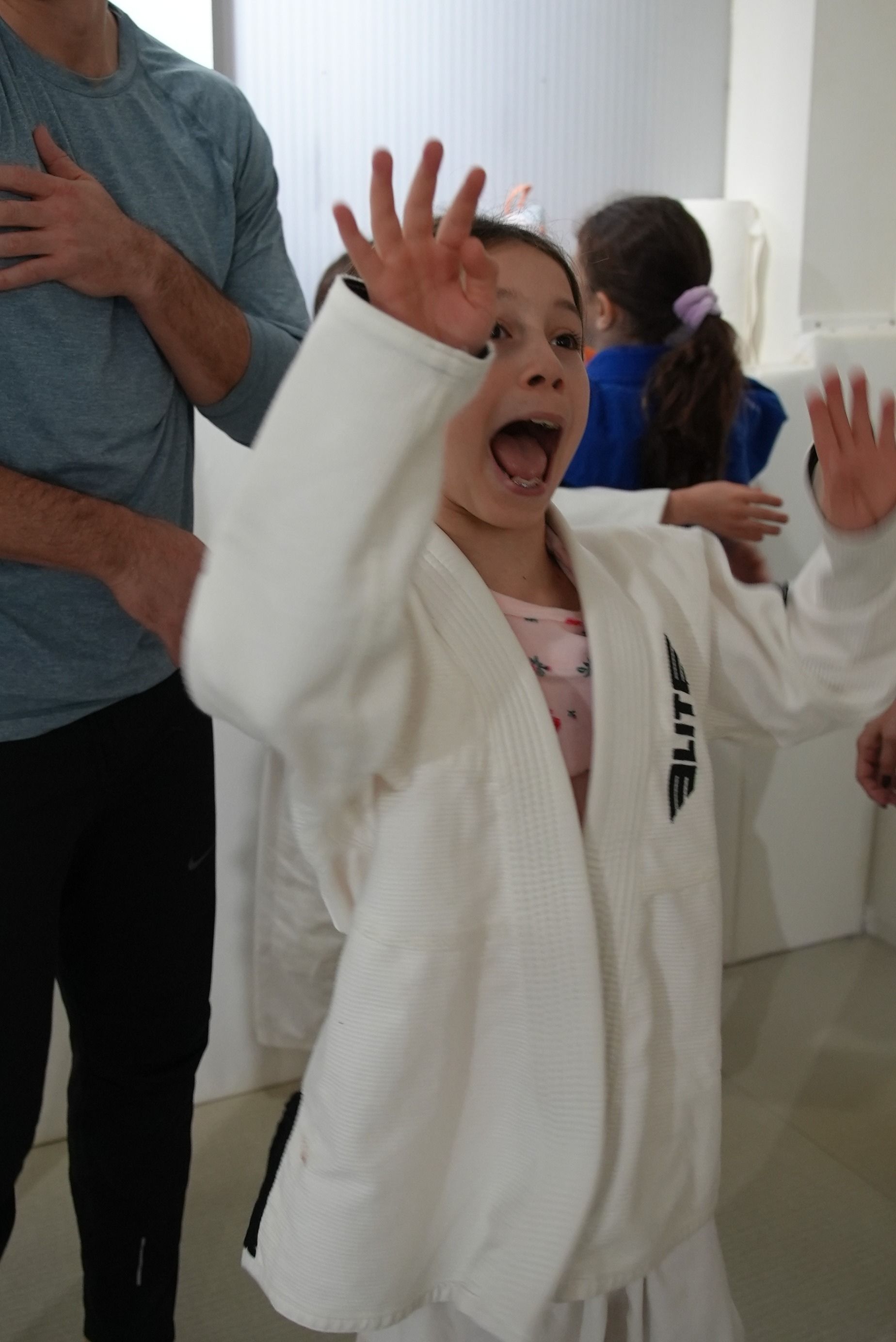
For a first visit, simple athletic gear is fine. We generally recommend a comfortable T-shirt and athletic shorts. Depending on the class type, a loaner Gi may be available for a trial, so it is worth asking ahead of time what the plan is.
Bring a few basics that make the experience cleaner and easier:
• Water bottle that is easy to open and not overly fancy
• Flip-flops or sandals for walking off the mats
• Small towel for sweat or post-class cleanup
• Hair ties if your child has longer hair
• Any required forms or notes about medical considerations
One small NYC-specific tip: if you are coming from school, pack the clothing in a separate bag so your child is not changing in a rush with a backpack avalanche on the floor.
Arrival Timing in NYC: Why Early Helps So Much
If you can arrive 10 to 15 minutes early, do it. In Manhattan, delays happen. Trains pause. Traffic stacks. Elevators do elevator things. Early arrival gives your child time to use the restroom, get oriented, and see the room before class starts. That alone can reduce nerves.
If you arrive late, do not panic. Quietly check in, help your child enter respectfully, and let us place your child into the activity safely. We would always rather have a calm late entry than a stressed sprint onto the mat.
What Your Child Will Experience During the First Class
A first Youth Brazilian Jiu-Jitsu class is usually an orientation to how training works. While each class can vary by age group and day, here is a realistic walkthrough:
1. Check-in and quick introduction so your child knows who to look to for instructions.
2. Warm-up movements like running, crawling, shrimping, bear walks, and safe breakfalls.
3. Rules and boundaries, including personal space, listening cues, and how to be a good partner.
4. One or two basic techniques, often position-based, like holding a safe top position or an escape.
5. Partner drilling with coaching and reminders to go slowly and stay controlled.
6. Short, supervised sparring or positional games when appropriate for the group.
7. Line-up, quick review, and what to do next time.
If your child walks out only remembering the warm-up game and one new movement, that can still be a win. The first day is about building comfort and structure.
Safety Rules Every Beginner Needs on Day One
Safety is not a side topic in Youth Brazilian Jiu-Jitsu. It is the foundation. We teach these rules early and repeat them often, and it helps a lot when you reinforce them at home in simple terms.
Here are the big ones we want every child to know:
• Tap or say stop the moment something hurts, feels scary, or feels too tight
• Let go immediately when a partner taps or says stop
• Move with control, not speed for speed’s sake
• Listen the first time when the coach is speaking
• Keep nails short and skin clean, and do not train with contagious skin issues or when sick
Also, an important household rule: do not practice submissions at home. It is tempting for kids to “show what we learned,” but without supervision and matching partners, that is where problems happen. If your child wants to practice, stick to safe movement drills like shrimping, bridging, or technical stand-ups.
Supporting a Shy, Nervous, or Sensory-Sensitive Child
Some kids walk in ready to jump on the mat. Some kids cling to you like you are the last helicopter out. Both are normal.
If your child is shy or anxious, aim for a small first-day goal: stand in line, follow the warm-up, or try one partner drill. Let the first class be a gentle introduction rather than a demand for full participation.
If your child is neurodivergent or has sensory sensitivities, tell us before class. Things like loud noises, close contact, unfamiliar textures, or sudden transitions can be tough. When we know what is going on, we can often adjust how we introduce activities, choose partners carefully, and give clearer expectations. The goal is not to “push through” discomfort. The goal is to build skill and confidence gradually.
How Often Should a Beginner Attend?
Consistency matters more than intensity. For most beginners, starting with a manageable schedule helps kids build routine without burnout. We can recommend an attendance pattern based on age group, energy level, and your family’s weekly logistics.
If your child trains occasionally but unpredictably, progress can feel choppy. If your child trains too often too soon, you may see fatigue and frustration. A steady rhythm is usually the sweet spot for Youth Brazilian Jiu-Jitsu in New York, where schedules are real and time is precious.
After-Class Debrief: What to Ask Without Leading the Answer
The ride home matters. So does the walk to the subway. This is where your child decides, quietly, whether the experience felt safe and interesting.
Try a few open-ended questions:
What was fun today
What felt confusing or new
Who did you partner with, and did that feel comfortable
Do you want to try again next class
Is there anything you want the coach to explain differently
Praise effort and listening more than “being tough.” If your child says it was hard, that is not failure. That is honest feedback, and we can work with it.
Signs the Program Is a Good Fit for Your Child
Every child is different, but a few signs usually show up when the environment is working:
Your child understands basic safety rules and repeats them back.
Your child feels comfortable asking questions or taking a break.
Your child is learning partner respect, even when excited.
Your child leaves tired but not overwhelmed.
Your child is willing to come back, even if it felt challenging.
That willingness to return is the real first-class victory. Youth Brazilian Jiu-Jitsu is a skill that builds over time, not a one-day event.
Take the Next Step
If you want your child’s first experience to feel structured, supportive, and age-appropriate, we have built our youth classes to do exactly that. At Range Brazilian Jiu-Jitsu NYC, we separate kids by developmental stage, keep the first class beginner-friendly, and focus on the habits that make training safe and positive in a busy city.
We are also big believers in keeping commitment pressure low at the start, which is why a trial class can be such a helpful first step. When you are ready, we will help you choose the right group, plan the first visit, and set expectations that make Youth Brazilian Jiu-Jitsu a sustainable part of your child’s week.
Ready to take your first step onto the mats? Join a Jiu-Jitsu class at Range Brazilian Jiu-Jitsu NYC.